
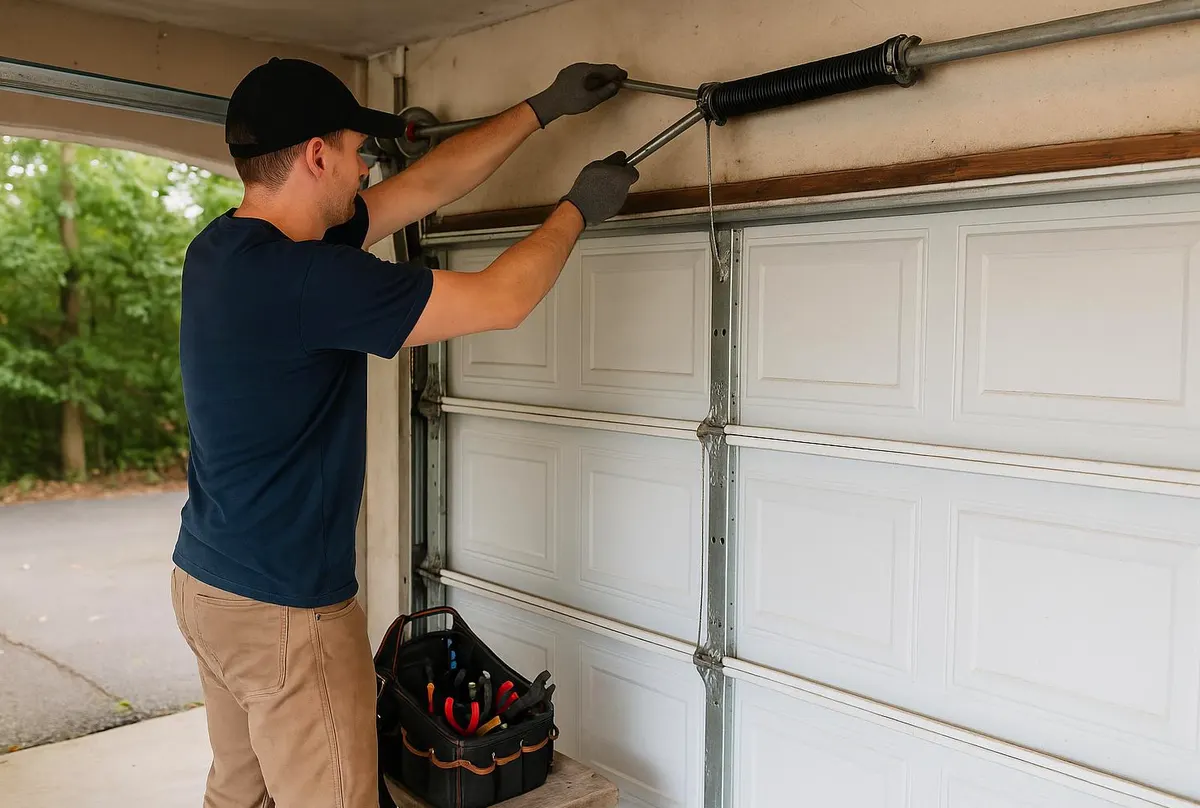
Skip garage door prep this fall and you're not just risking an inconvenience — you're risking a snapped spring on the coldest morning of the year, a door that won't budge when you're already running late, or a security gap that lets winter wind and water into your garage for months. A $15 tube of lubricant and twenty minutes now is a lot cheaper than an emergency service call in January.
Why Winter Here Is Harder on Garage Doors Than It Looks
North Alabama winters aren't brutal, but they're inconsistent, and inconsistency is what actually damages garage door hardware. A 60-degree afternoon followed by a hard freeze overnight makes metal springs and tracks contract and expand repeatedly. Add in the humidity swings and leftover moisture from hurricane-season storms, and you've got the perfect setup for rust on springs, rollers, and tracks — especially if your door already took on water or debris during fall storms. Homes with wood-paneled doors can also see swelling turn to cracking as moisture content drops with the colder, drier air.
Step 1: Lubricate Before the First Hard Freeze
Cold makes grease and oil thicken, which means hinges, rollers, and springs that were fine in September can start grinding or squeaking by December. Use a silicone-based or garage-door-specific lubricant (avoid WD-40 as a long-term lubricant — it's a cleaner, not a lubricant) on:
- Torsion or extension springs
- Roller bearings
- Hinges
- The track-facing edge of the opener's drive chain or screw
Wipe off excess so it doesn't attract dust and grit.
Step 2: Inspect Weatherstripping and Seals
The rubber seal along the bottom of the door and the vinyl stripping around the sides and top are your main defense against wind-driven rain and cold air. After a summer of heat and a fall of storms, check for:
- Cracking, brittleness, or sections pulling away from the frame
- Gaps you can see daylight through
- Flattened or torn bottom seal that no longer makes contact with the slab
Replacing weatherstripping is a low-cost job (national ranges typically run $50–$150 for materials and labor) and it directly affects how much cold air and moisture gets into an attached garage — which matters if you've got pipes, a water heater, or a workshop in there.
Step 3: Test the Balance and Check the Springs
Disconnect the opener and lift the door manually about halfway. If it doesn't hold its position, your springs are losing tension — and cold weather is exactly when fatigued springs are most likely to fail, because the metal is less forgiving when temperatures drop. A door that feels heavier than usual, slams down faster than it used to, or makes a loud bang when closing is telling you the springs need attention now, not in March.
Step 4: Clear and Inspect the Tracks
Leaves, pollen, and grit from fall storms settle into the tracks and mix with moisture to create the early stages of rust. Wipe the tracks down with a damp cloth, check for any bends or dents from storm debris, and make sure mounting brackets are still tight. Surface rust can often be cleaned with a wire brush and a light coat of rust-inhibiting lubricant before it spreads.
Step 5: Check the Opener and Backup Battery
Winter storms knock out power more often than people expect, and a garage door opener with a dead or missing battery backup means you're stuck using the manual release in the dark and cold. Test the backup battery, confirm the safety sensors (the small eyes near the bottom of the track) are aligned and free of condensation, and replace batteries in any wireless keypads or remotes.
If You've Got Living or Storage Space Above the Garage
Check for insulation gaps around the door frame and header. An uninsulated or poorly sealed garage door can make upstairs rooms noticeably colder and drive up heating costs — a problem that shows up fast once temperatures start dropping consistently.
When to Call Owens Cross Roads Garage Door Solutions
If your door is off balance, a spring looks stretched or has a visible gap in its coils, or you're hearing new grinding or banging sounds, that's past the DIY stage. Our Garage Door Maintenance visits cover a full inspection, lubrication, and hardware tightening, and if a spring is on its way out, our Spring Replacement service gets it swapped before it fails on a freezing morning instead of after.
Give us a call before winter settles in — Owens Cross Roads Garage Door Solutions serves homeowners throughout Owens Cross Roads, Huntsville, Hampton Cove, Big Cove, New Hope, Gurley, Brownsboro, and Meridianville, and we'd rather catch a worn spring in November than get the emergency call in January.